Down Memory Lane to the Refugio del Fraile
A return to a classic Patagonian refuge reveals how the
landscape, and the experience of trekking through it, has transformed
over nearly two decades.
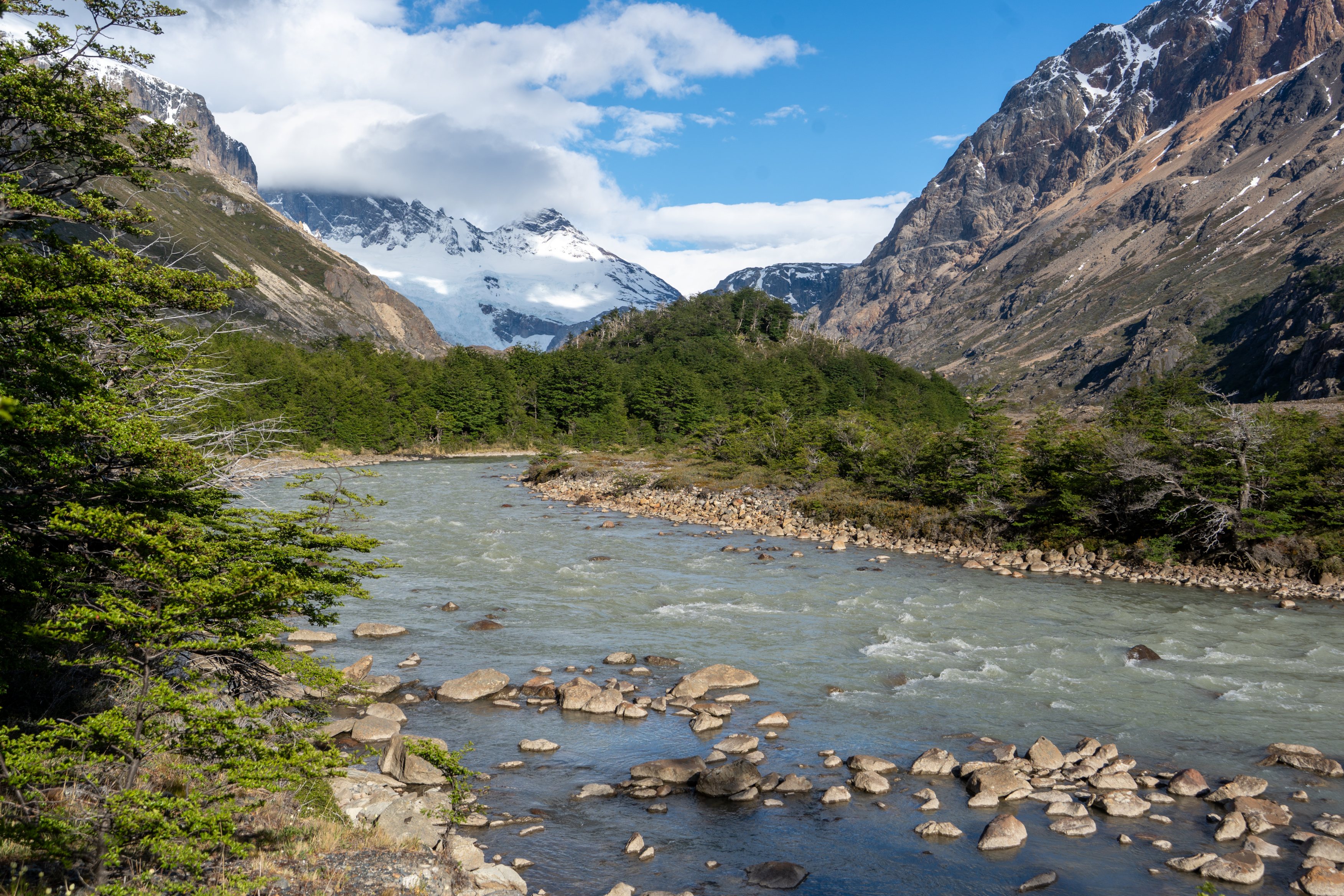
The Rio Electrico Valley felt familiar, but the sound was different. The
crunch of our boots on a wide, manicured trail had replaced the rustle
and tear of pushing through spiky bush. This was the first sign that the
Patagonia I remembered from 2006 was now a slightly different world.
This three-day backpacking trip to the Refugio Piedra del Fraile and
Laguna Pollone was a journey down memory lane, and at every step, the
past whispered back, comparing itself to the present.
Our backpacking return was to evoke many memories from the past so
please bear with me as I frequently look back and compare this
experience to past recollections. We first came here in 2006 and then
again in 2010, 2011, 2014 and finally in 2016. The refuge is only a
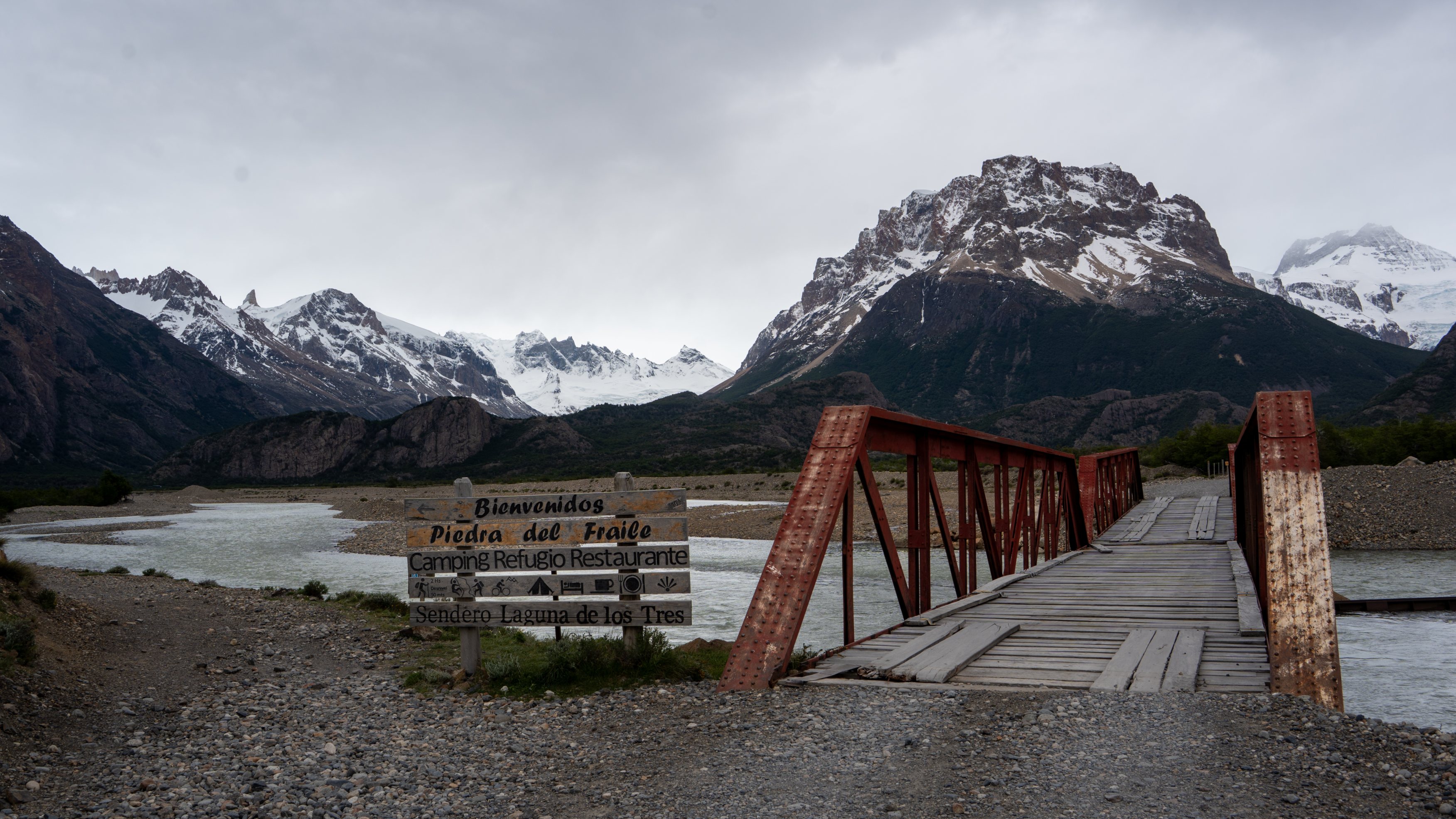
couple of hours from the trail head at the bridge over the Rio
Electrico. Situated on the leeward side of a huge mound, it forms a
welcome retreat and safe haven for those heading onto (or indeed,
escaping from!) the Southern Patagonian Icecap.
The Changing Trail to Refugio del Fraile
Jorgito, from the Hosteria Confin Patagonico, a family we've known
since 2010, drove us to the start by the Rio Electrico bridge, a
forty-five minute journey. The first thing we noticed was the number of
cars parked there, maybe thirty? I can't remember ever having parked
cars here, the bridge was just a dropping off point. What were they
doing here, surely the trails are not that popular?
It wasn't raining, it wasn't even windy. This is unusual as both wind
and rain are the norm when I start off from here. There is logic to this
madness as to take best advantage of every possible weather window the
easy half day walk to the refuge can be done in poor weather.
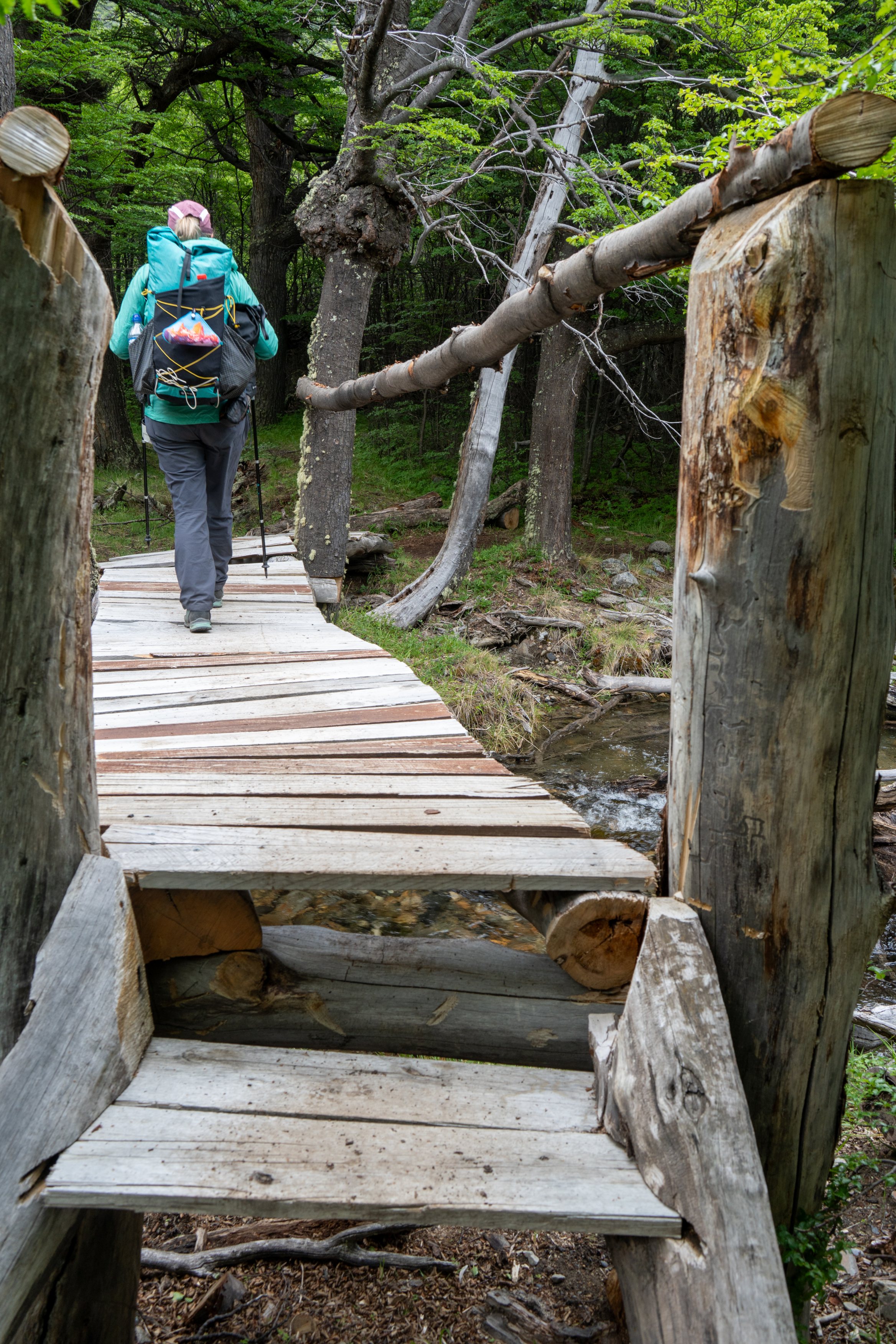
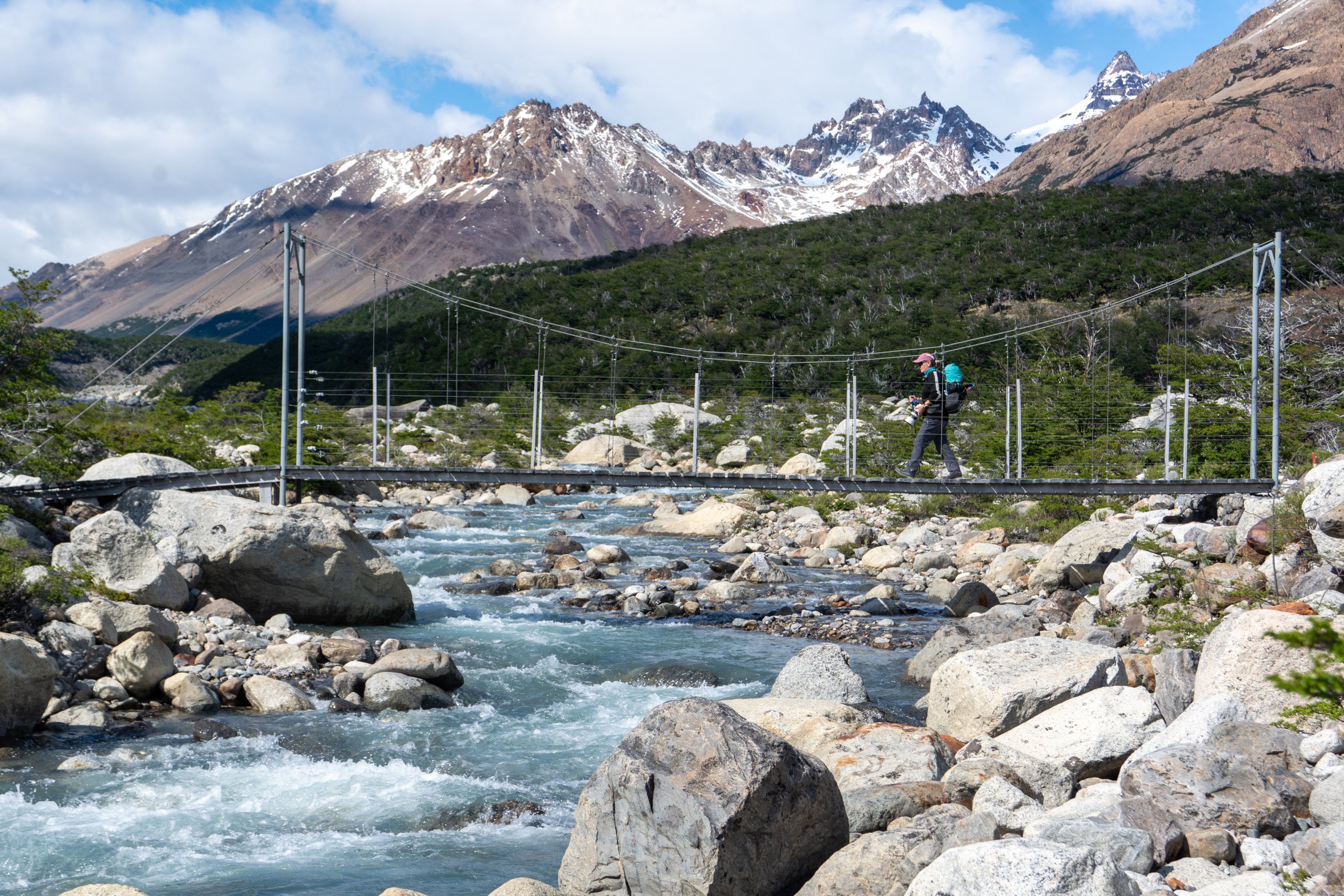
About fifty meters from the bridge, we reached the first stream
crossing. In the past at least one of my fellow adventurers, unused to
20+ kilogram weights would have got wet feet here. Now there is a sturdy
wooden bridge.
In 2006 after crossing the stream there were a few faint tracks leading
into the bush. The bush hereabouts was thick and spiky. I remember
Joachin tearing his nice new rucksack rain cover here not 5 minutes
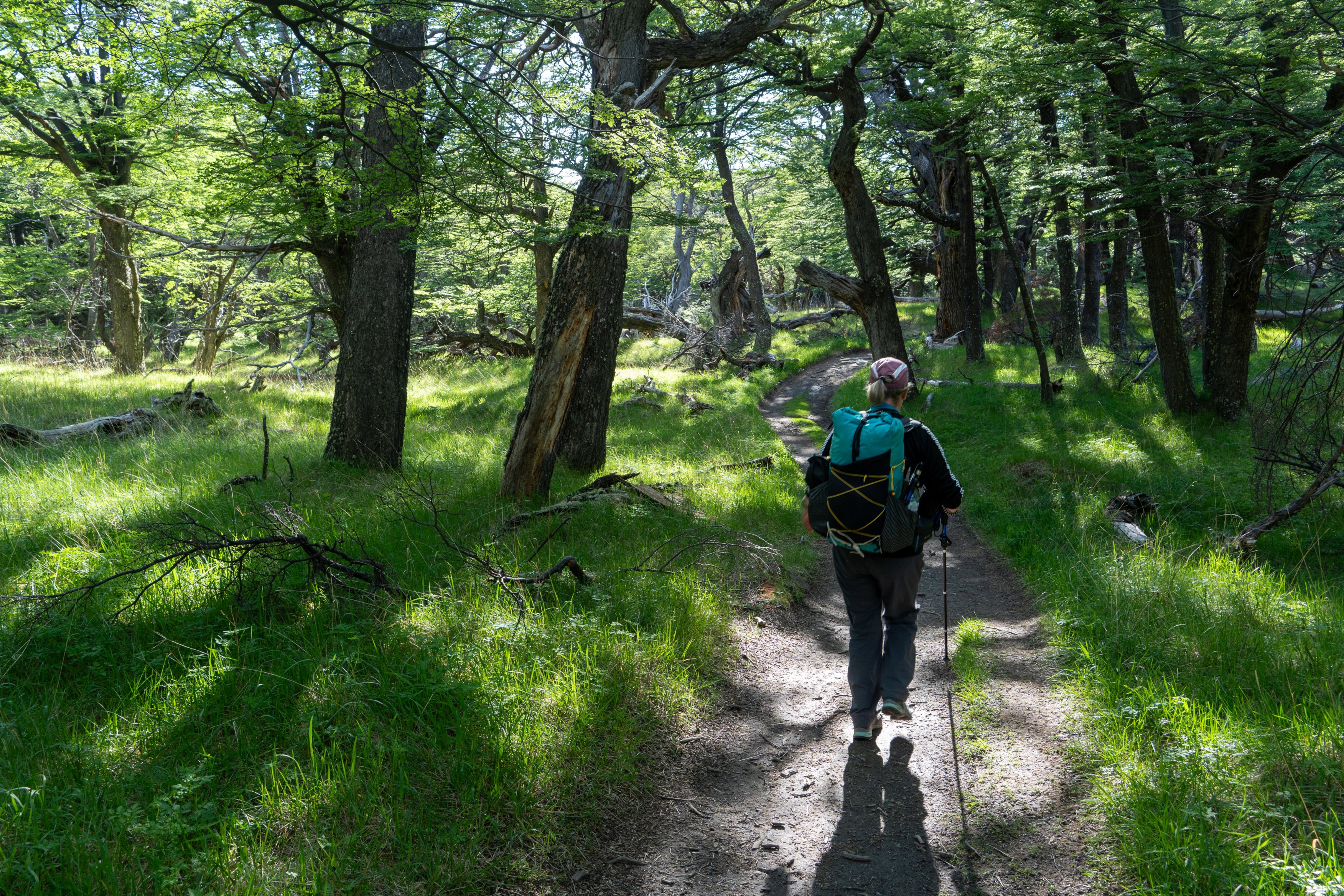
after starting the trek. Now, it's a wide track that two people can walk
along side by side. No errors are possible.
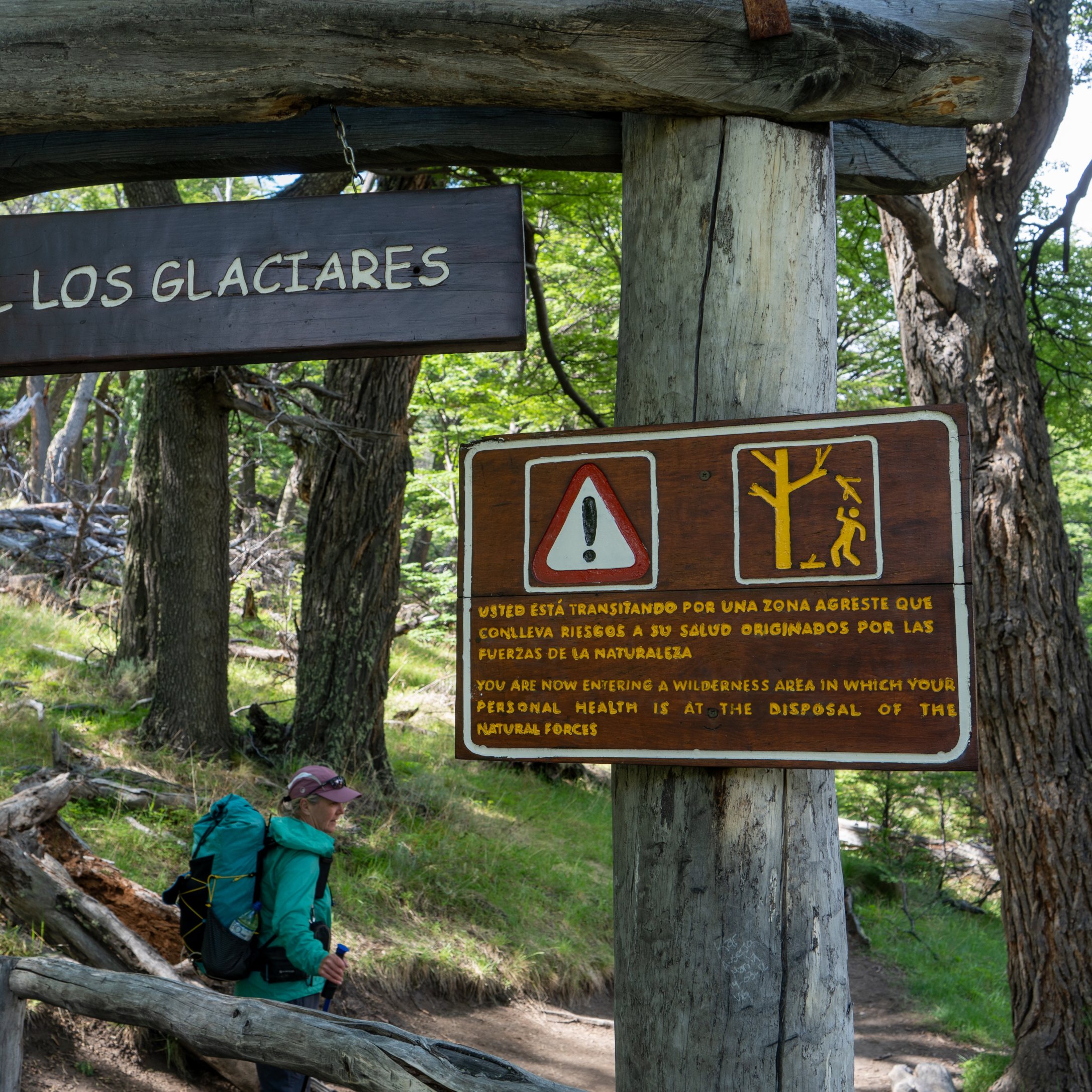
The track led to a small booth, the new National Park entrance station.
Here you pay your entry fee to enter the park. In the past this whole
area was private land and you just paid a small fee to the Refugio
Piedra del Fraile direct.
All the trails hereabouts are well marked. A major trail goes off to the
south towards Piedras Blancas and Camp Poincenot. We took the westerly
track up the Rio Electrico Valley. You can't get lost, just follow the
well maintained trail. There are muddy sections but rather than the
usual balancing on dodgy broken branches most muddy sections have easy
ways through.
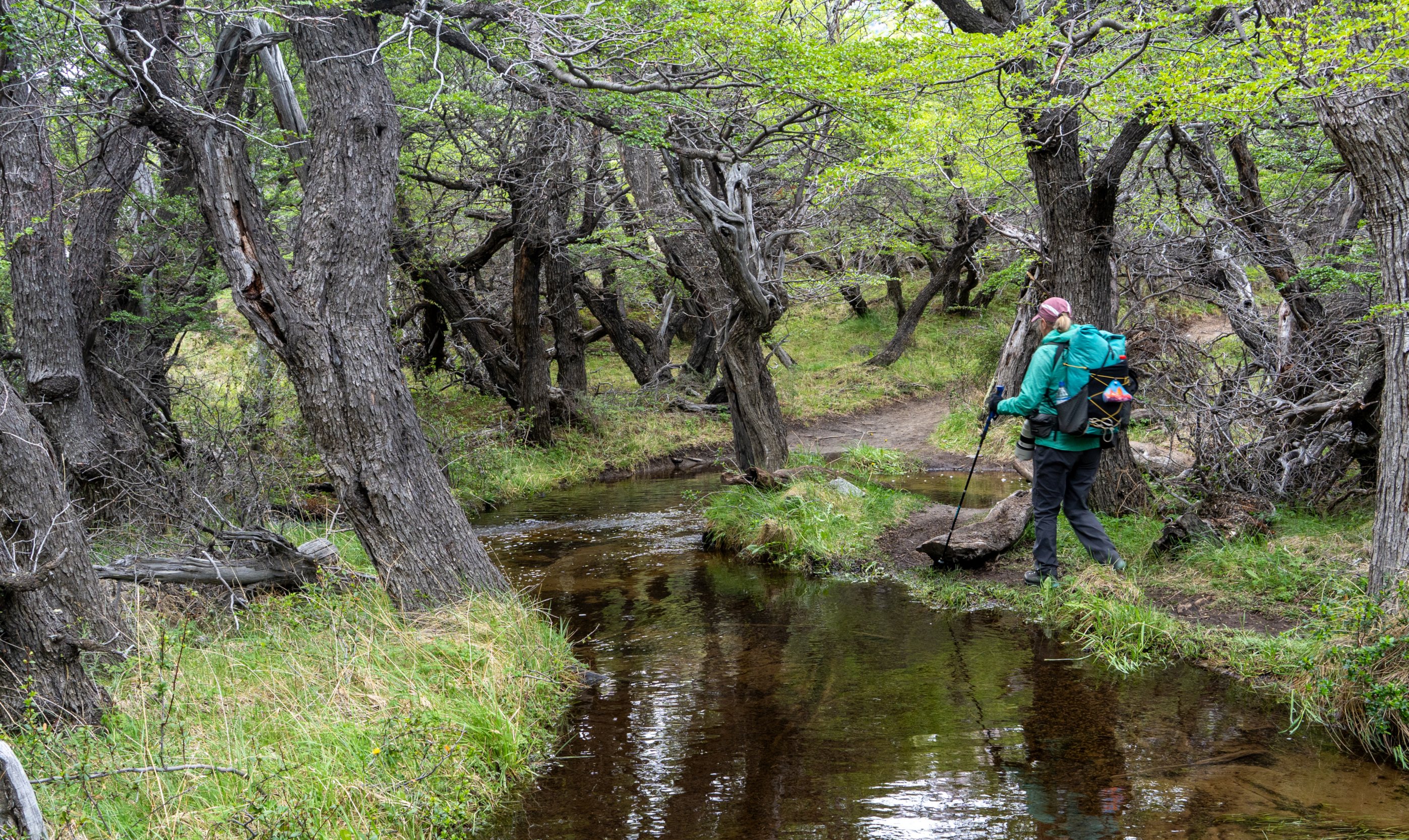
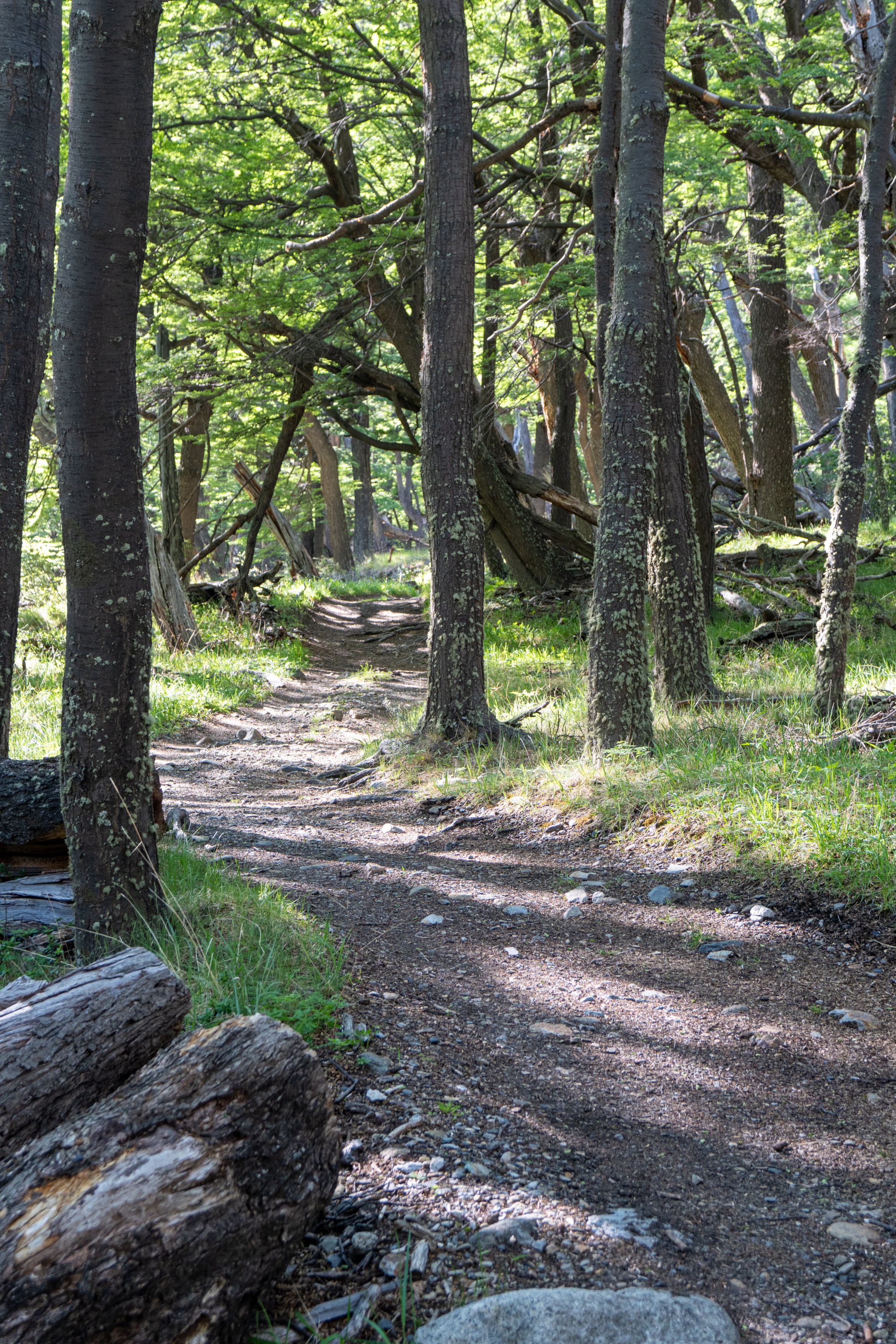
The forests don't change though. Well, they do as there is constant
upheaval due to wind and erosion. The forest is a tangled mass of
broken, twisted and torn trees. There are natural open glades that let
the sunlight through. It's beautiful. If you are lucky, we weren't, you
just might catch sight of the Huemul deer. Only 75 exist in the Park.
Rare indeed. We were lucky though with first hearing, then spotting, the
red headed Magellanic Woodpecker, as close a relation to "Woody" as I've
ever seen.
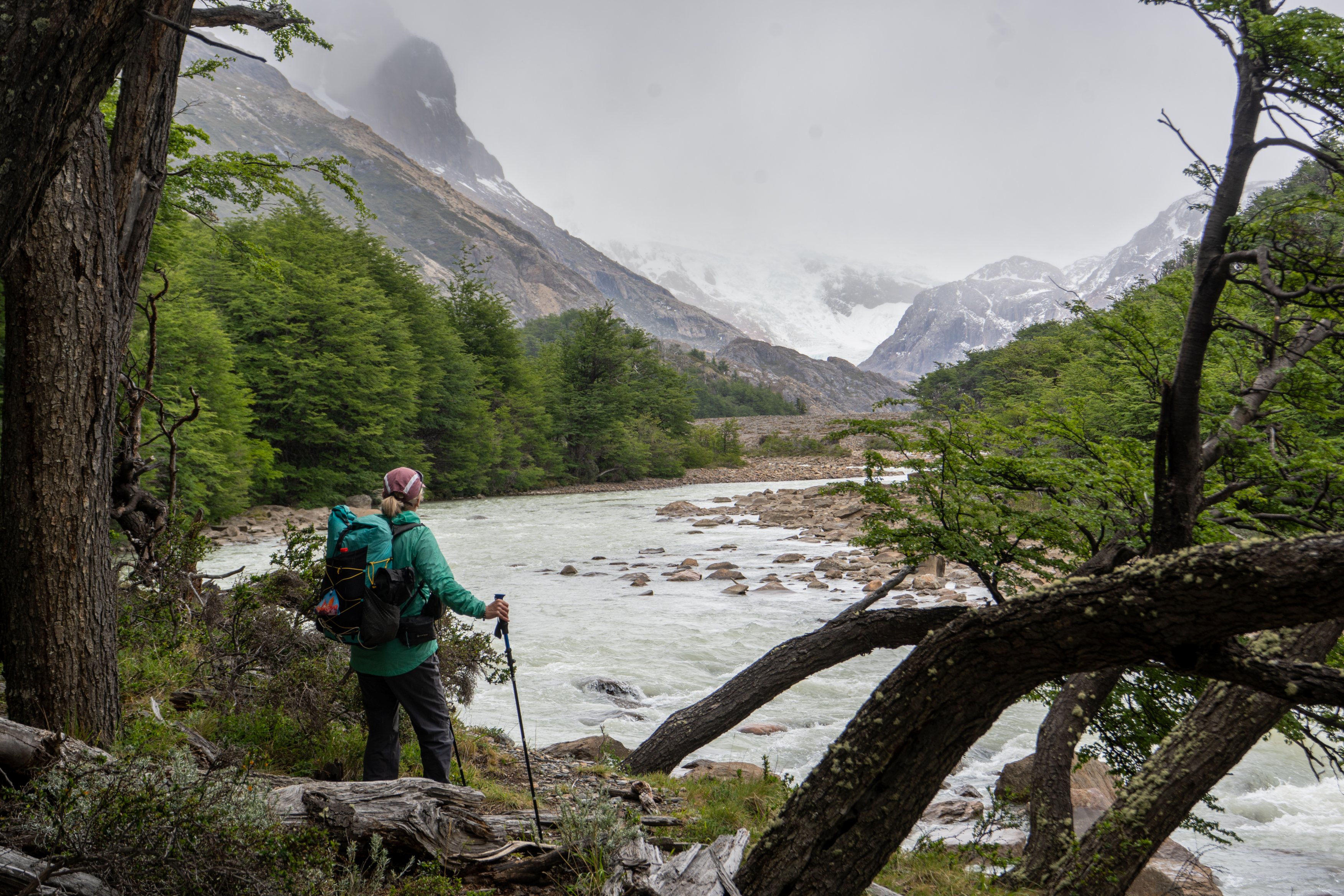
The sound of the river grew as a small clearing on the left gave us an
opportunity to emerge from the forest onto a platform above it. We
looked up to Cerro Marconi Norte and the Icecap with fondness and with
memories flooding back. Turning round we got a shock. A building, black
and flat topped. Many windows, some with people looking out at the same
view as ourselves. What? We later found out this is a "Eco" Hotel and
you only need $2000 USD to stay there a night. Eco? Right.
The sight was jarring. It felt as if we had just crossed an invisible
frontier from ‘New Patagonia' back into ‘Old Patagonia.' Slightly
disturbed, we pressed on, hoping the refuge had held its ground against
time.
To be fair we had seen only one other backpacker on our trail making his
way towards the refuge. We passed a previous rocky landslip or avalanche
area, now overgrown with wild flowers and greenery. Just beyond we
arrived at the refuge.
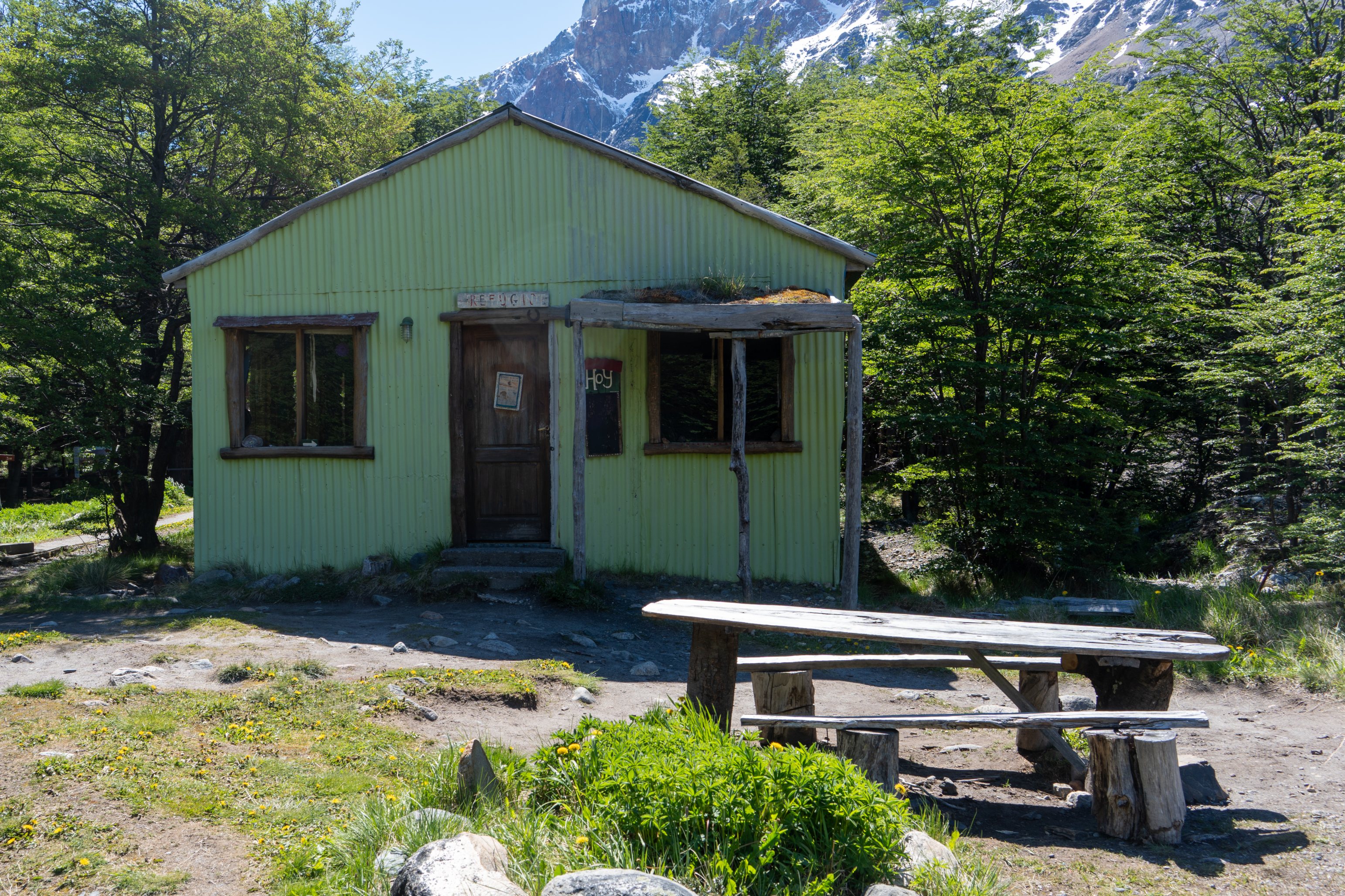
Refugio del Fraile is a old fashioned, and at first sight, a somewhat
run down mountain refuge that screams "Old Patagonia". It hasn't changed
that much in 19 years. The campsite is in a sheltered wood and there are
some large wooden buildings that serve as a toilet block and a store
shed. There is a new building that houses 8 people in dormitory style
comfort. We used to cook in the corrugated iron shacks outside that
offerred some protection from the rain. Now there is a sturdy wood built
area.
The main refuge looks exactly the same. It serves meals (pizza, pasta,
hearty stews etc) and has a large welcoming warm fire. It even serves
coffee, tea, beer or Malbec. It was always a good place to stay as an
intermediatery step between the comforts of modern life and the harsh
realities of the Patagonian Icecap.
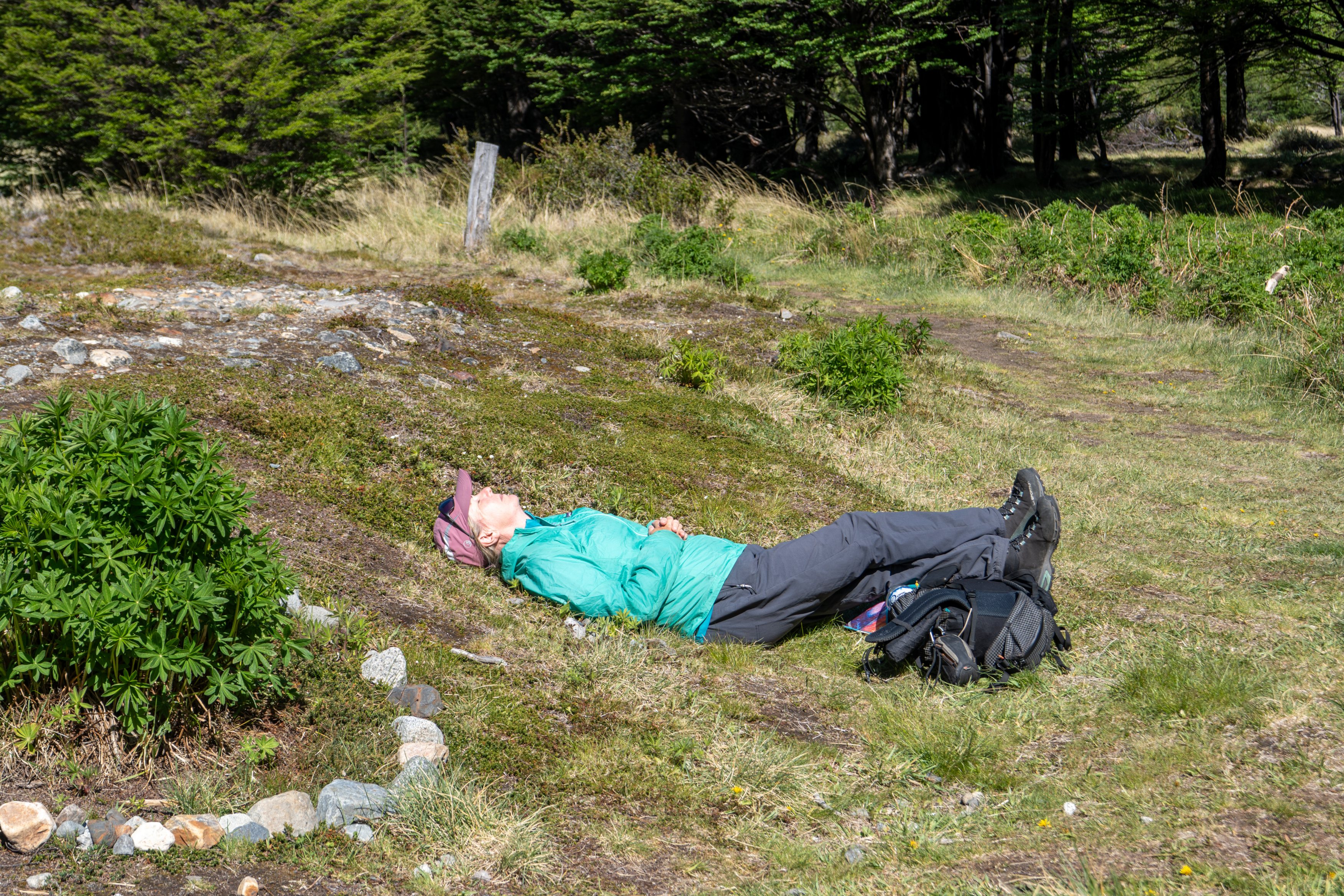
I looked wistfully at the grassy strip outside the refuge. It was there
I had laid, battered, bruised, beaten and snowblind after retreating
from Paso Marconi in 2010. Utterly exhausted we had dumped our
overweight packs and stretched out in the warm sunshine on the lovely
soft grasses to sleep. Kiersten and I treated ourselves to pizza and a
bottle of Malbec before retiring to our tent in the woods.
Tranquil Moments at Laguna Pollone
It was a cold night and we awoke early to a frost. The skies were
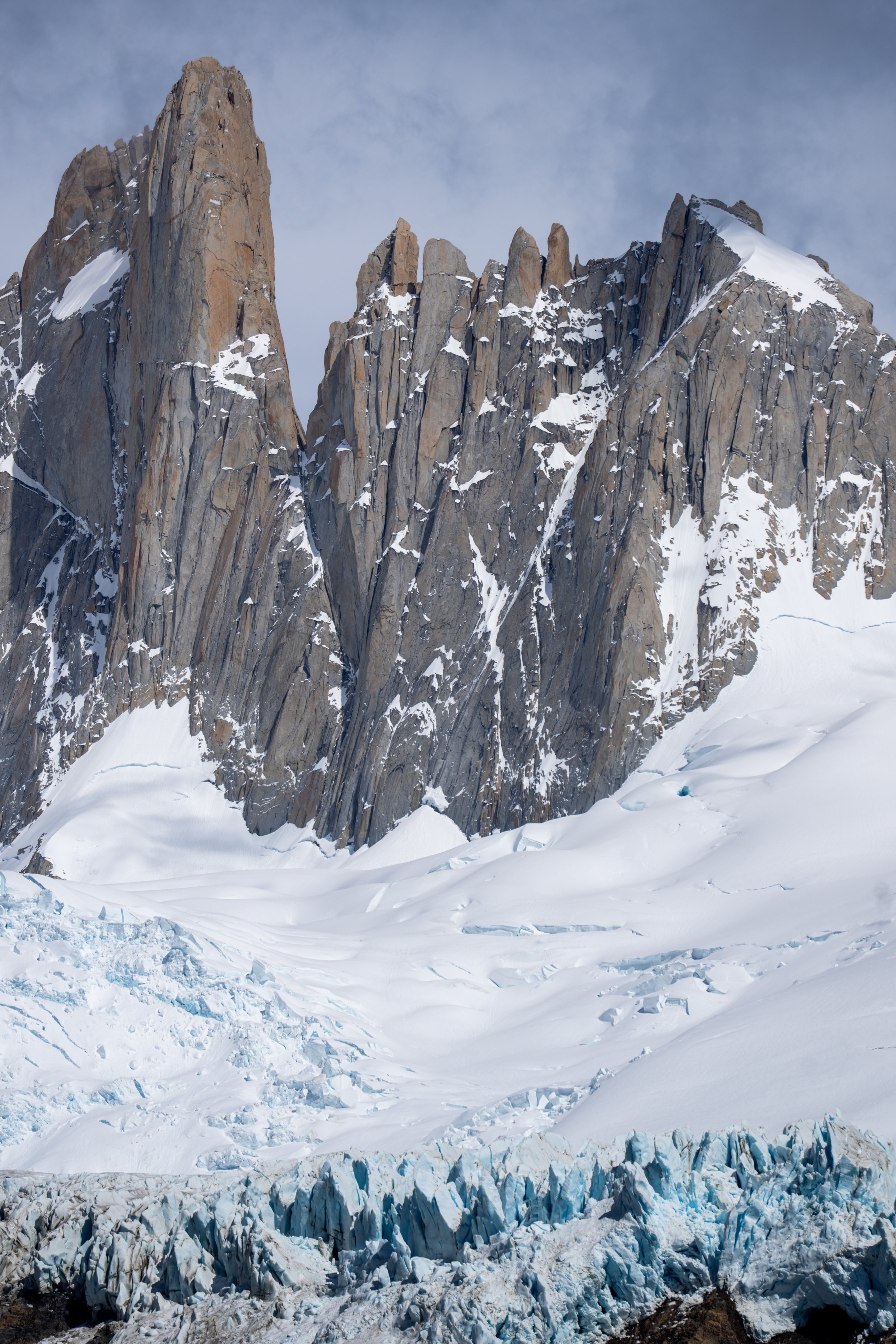
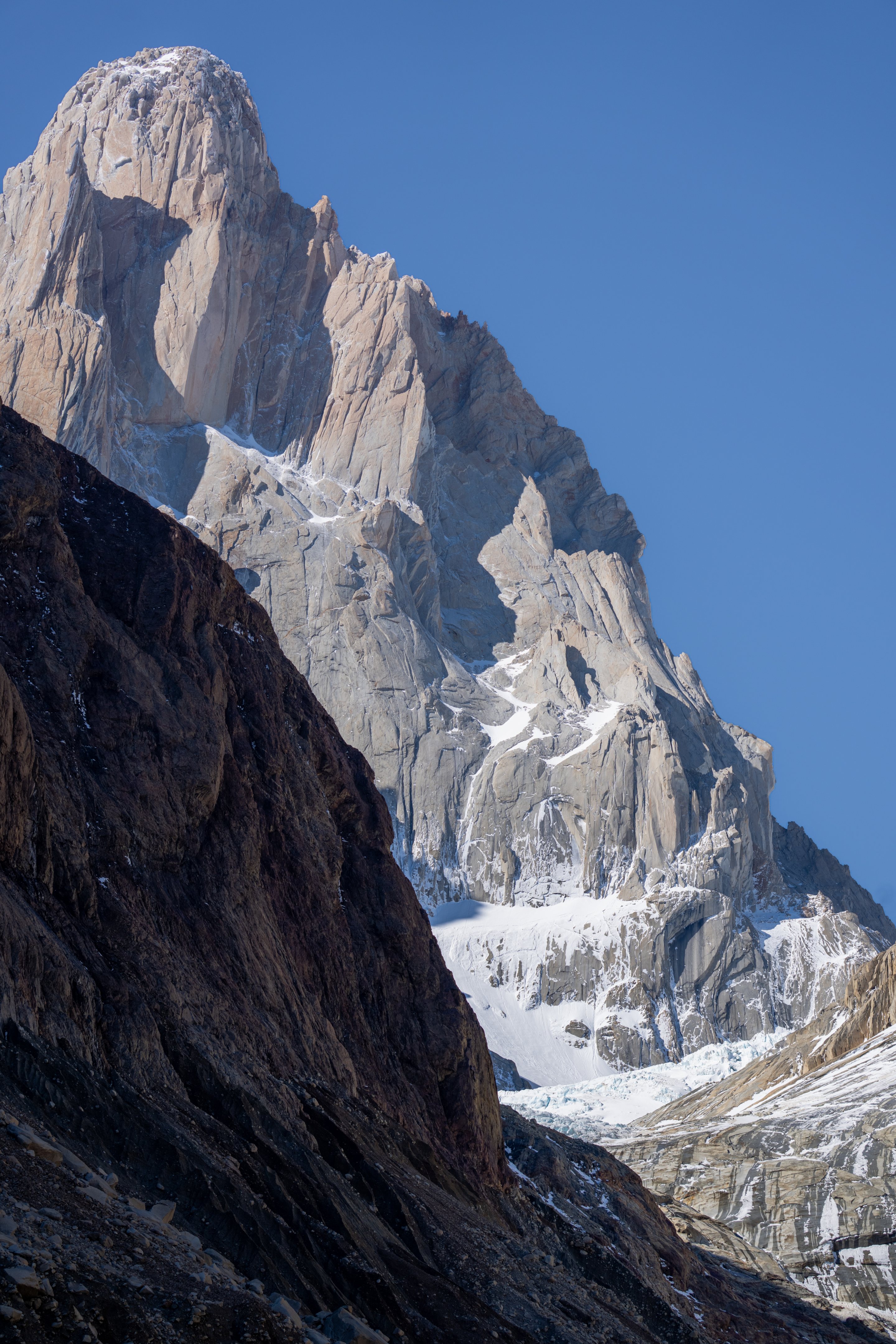
clear and the sun had already hit the tops of the Fitz Roy range as we
packed our packs for a day hike to Laguna Pollone. Laguna Pollone was
chosen as our original idea of going to Paso Cuadrado didn't appeal due
to the huge height gain necessary. Ok, we took the easier option. After
all, this was supposed to be a holiday, wasn't it?
It didn't take long before I realised that we had chosen really well.
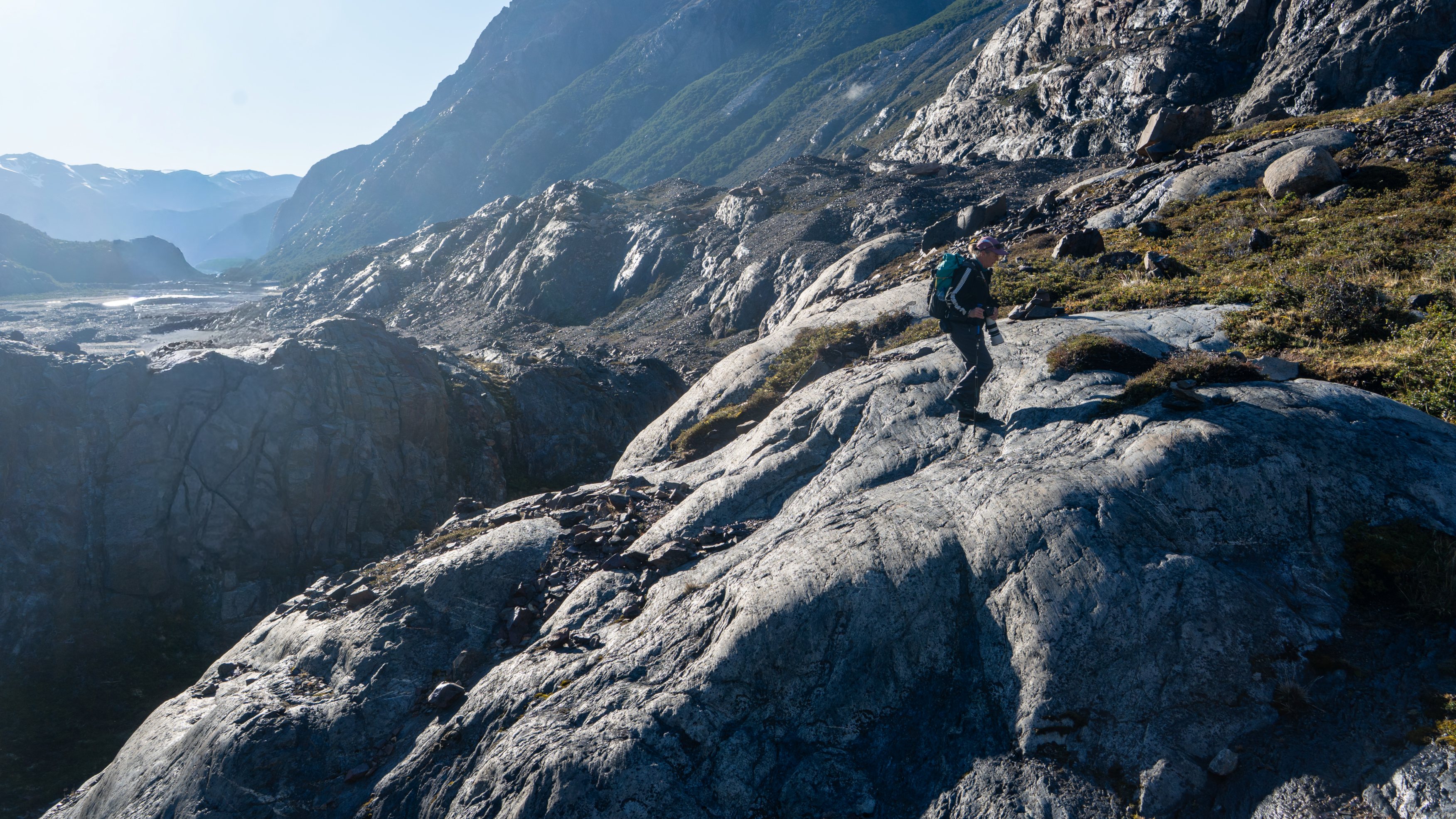
Within 5 minutes of leaving we emerged onto the flat plain of the Rio
Electrico valley. This led up through a series of old terminal moraines
to a climb up and over a hillside. Trail marking has much improved here
and there is little excuse for getting into difficulties, as we used to.
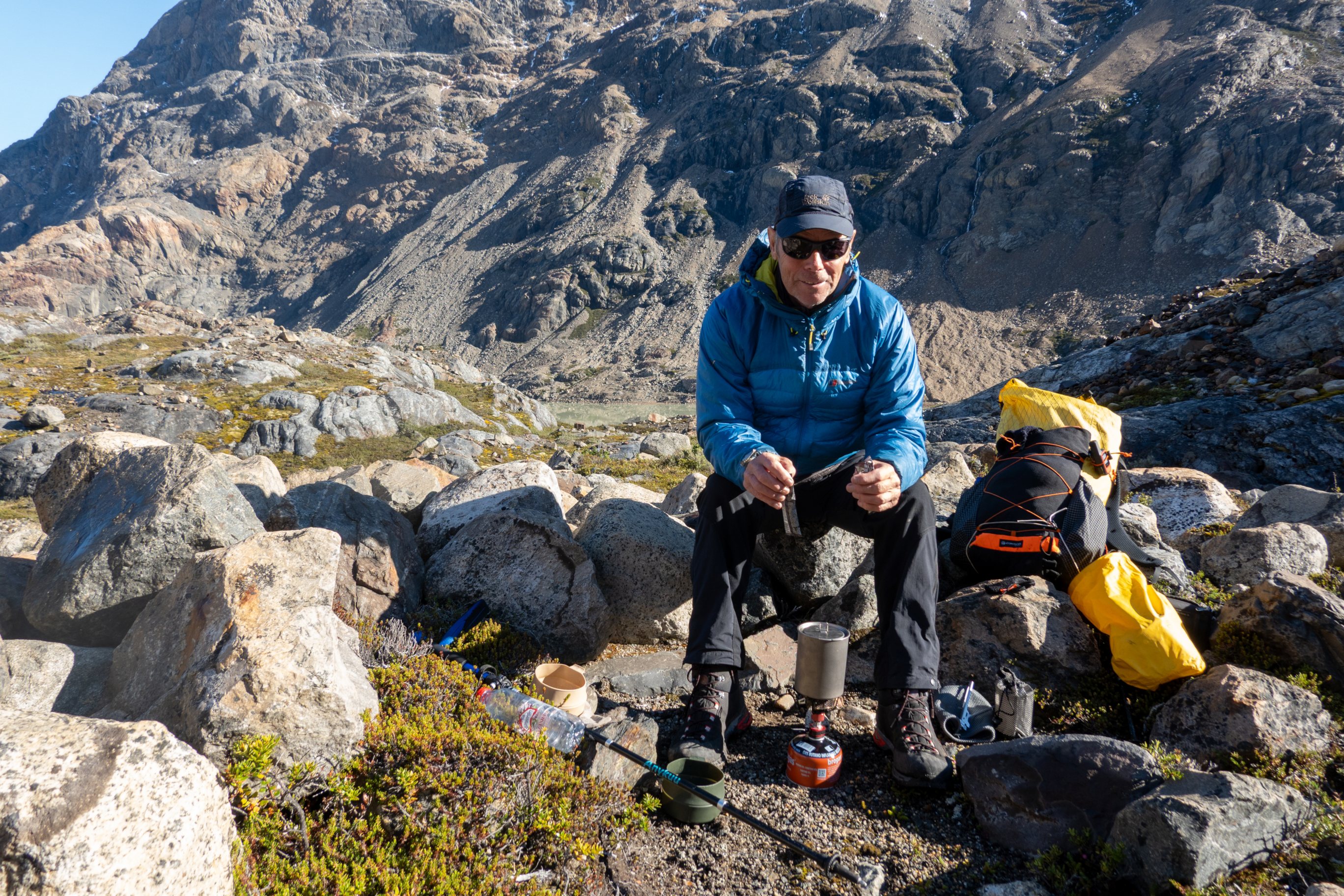
Here we took a break and sat down to brew coffee but, due to the cold
air, the gas wouldn't ignite. Suitably chastised we continued to emerge
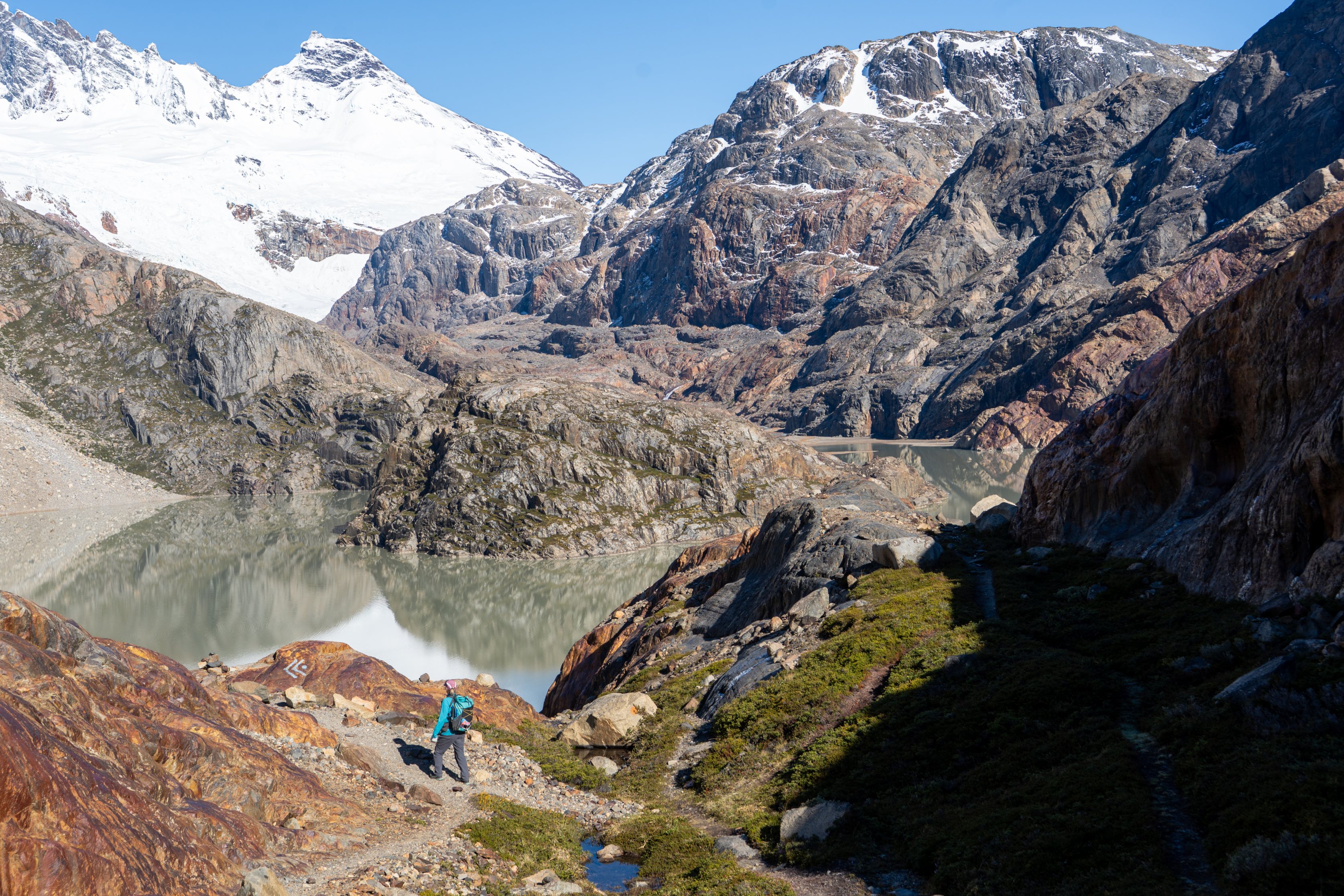
onto a small pass overlooking the Rio Pollone. Thoughts came back here
again to the past. To the stumbling, barefoot crossings of this icy cold
river with our friends.
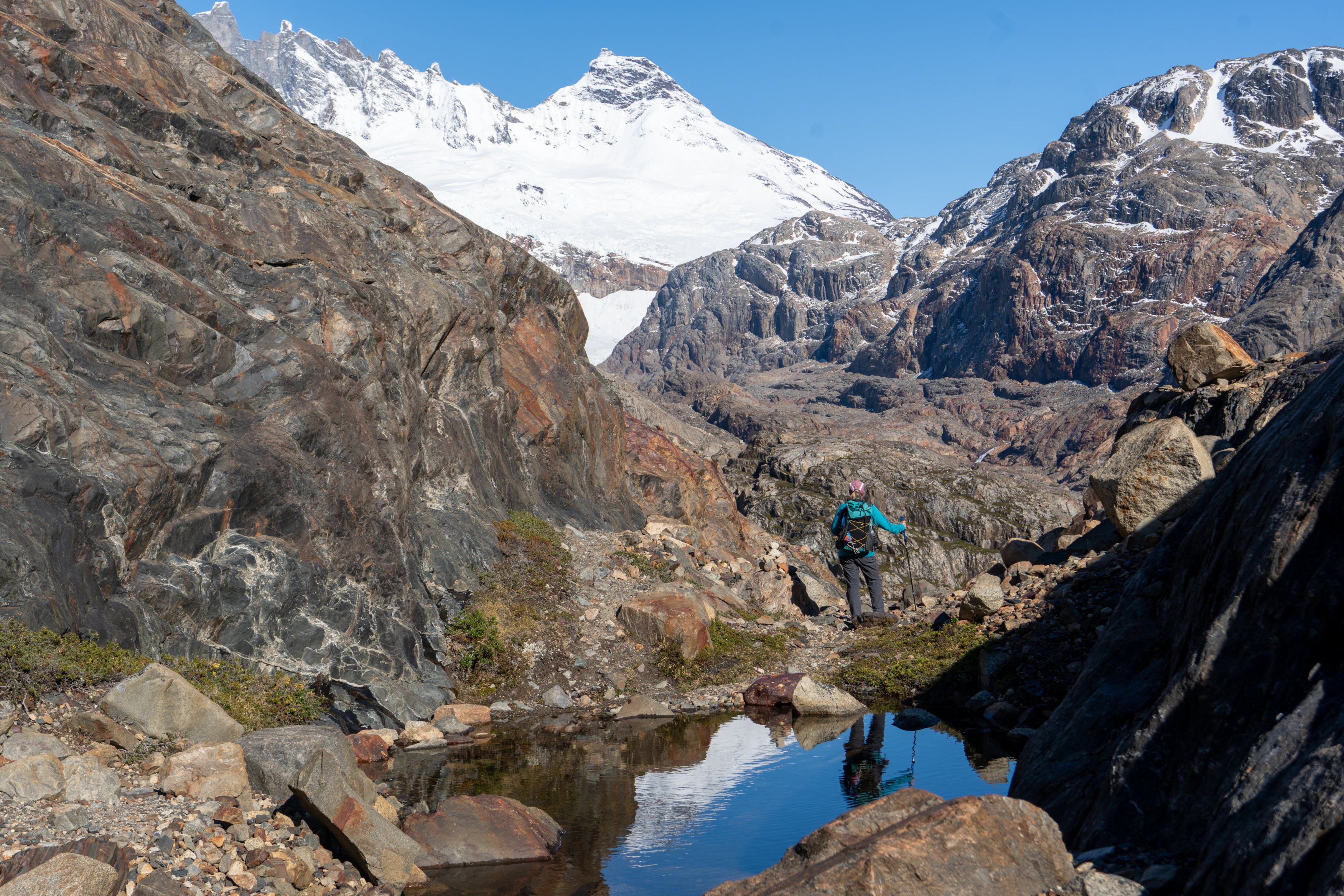
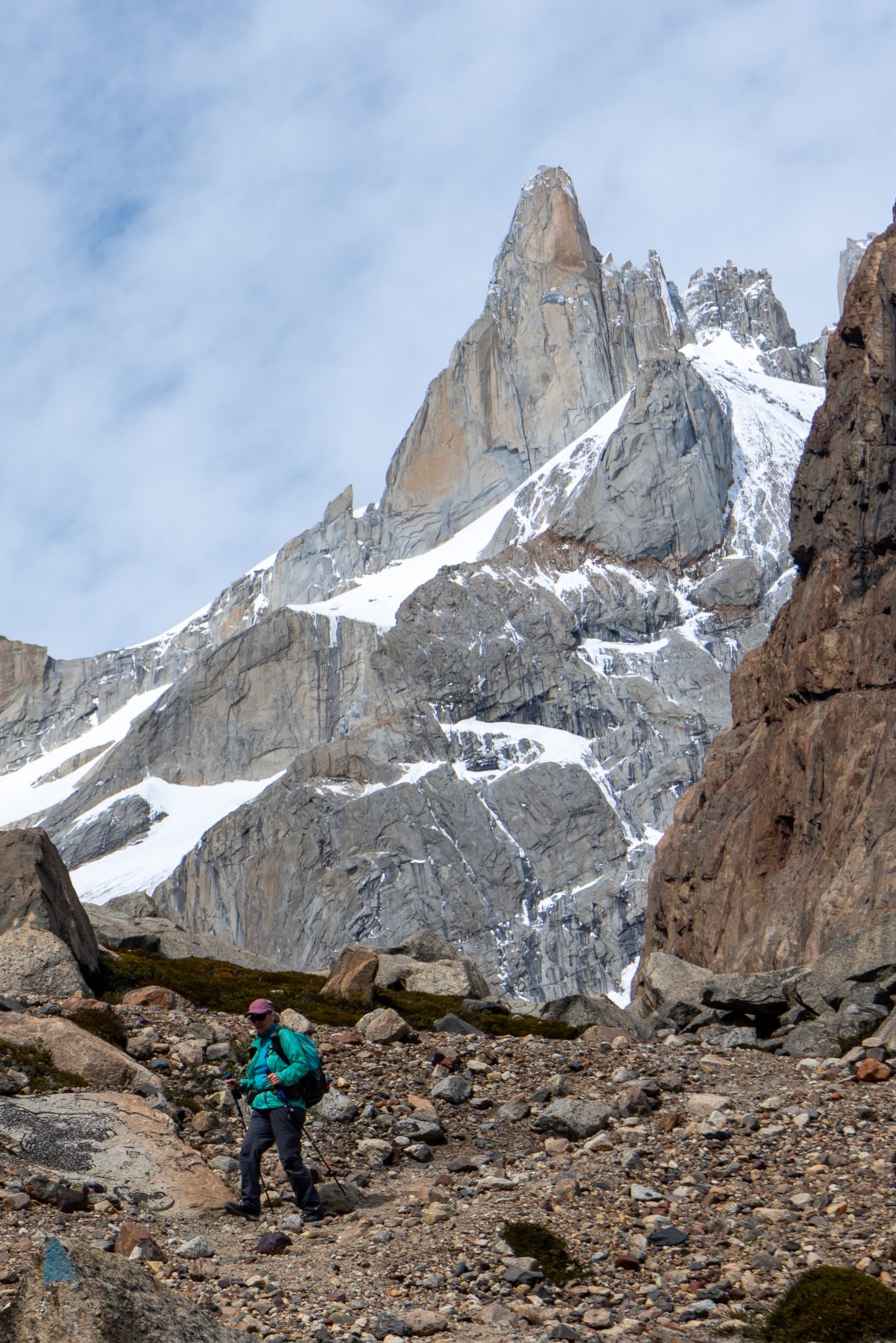
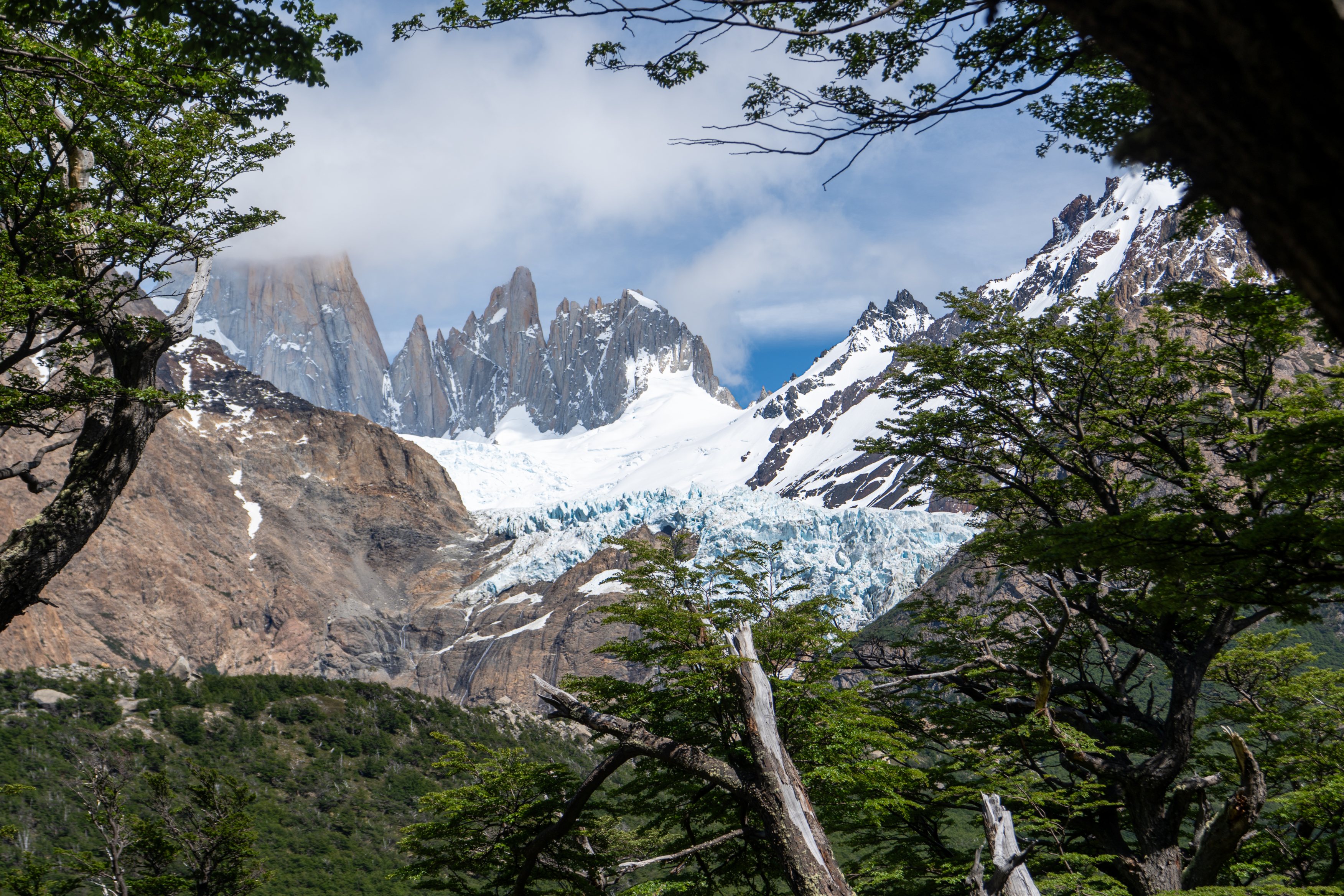
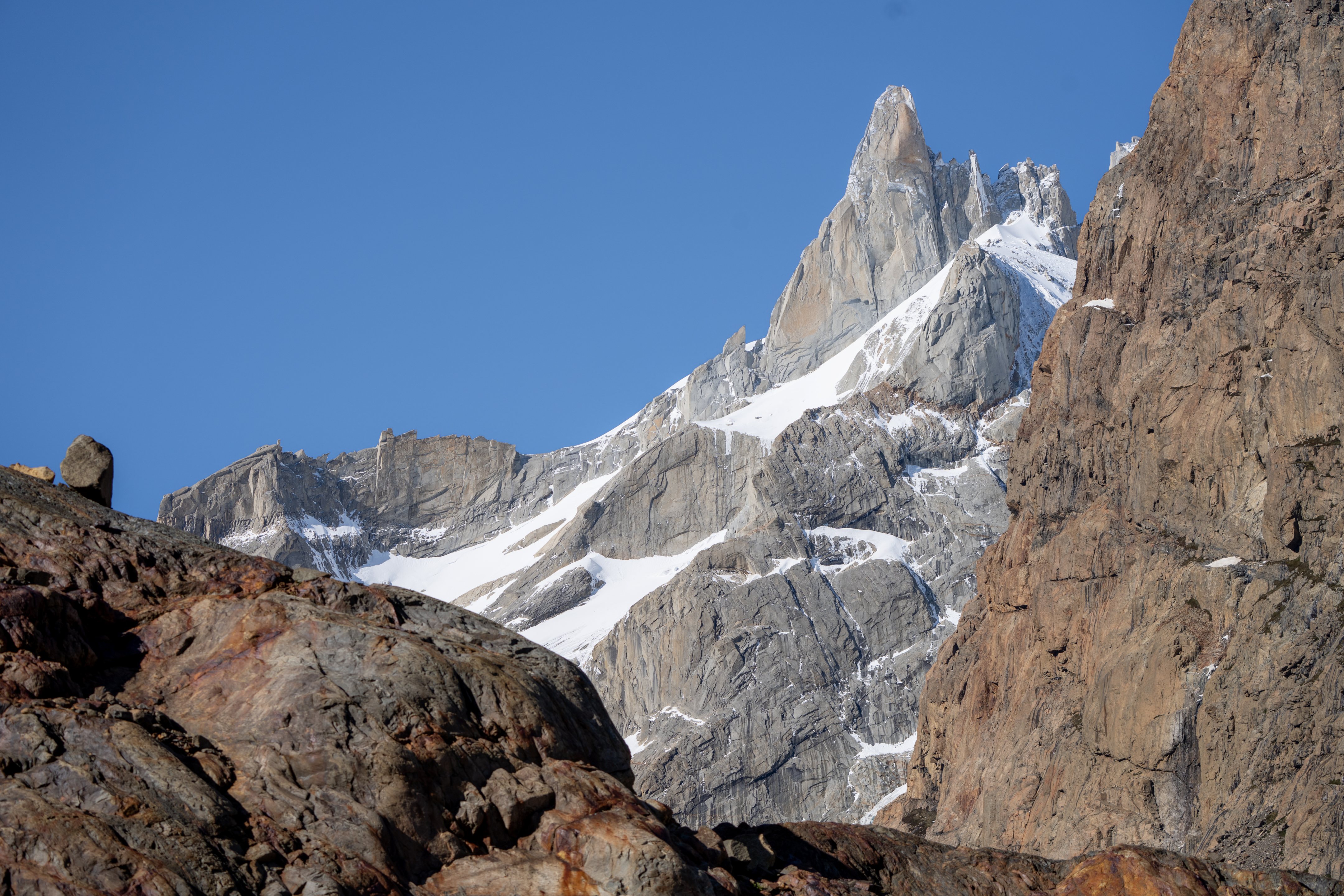
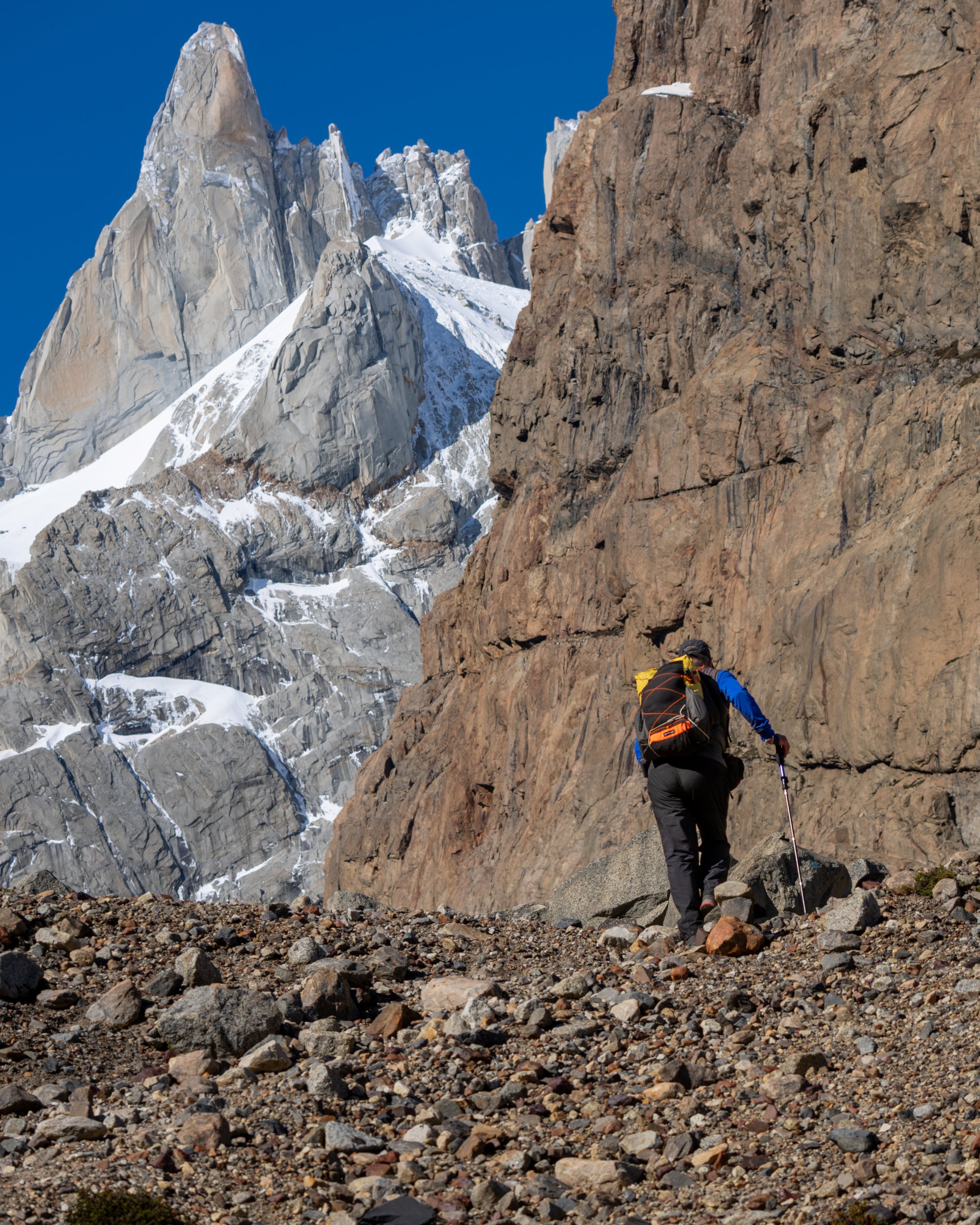
What a view! Ahead was the white wall of the Cordon Marconi and to the
right Gorra Blanca towered over the Electrico valley. We could see our
previous campsites at La Playita, the other side of the lake. Up to the
left the Pollone valley gave us a sample of the delights to come. Fitz
Roy north west face to the left whilst the pinnacle of Cerro Pollone
rose to the right.
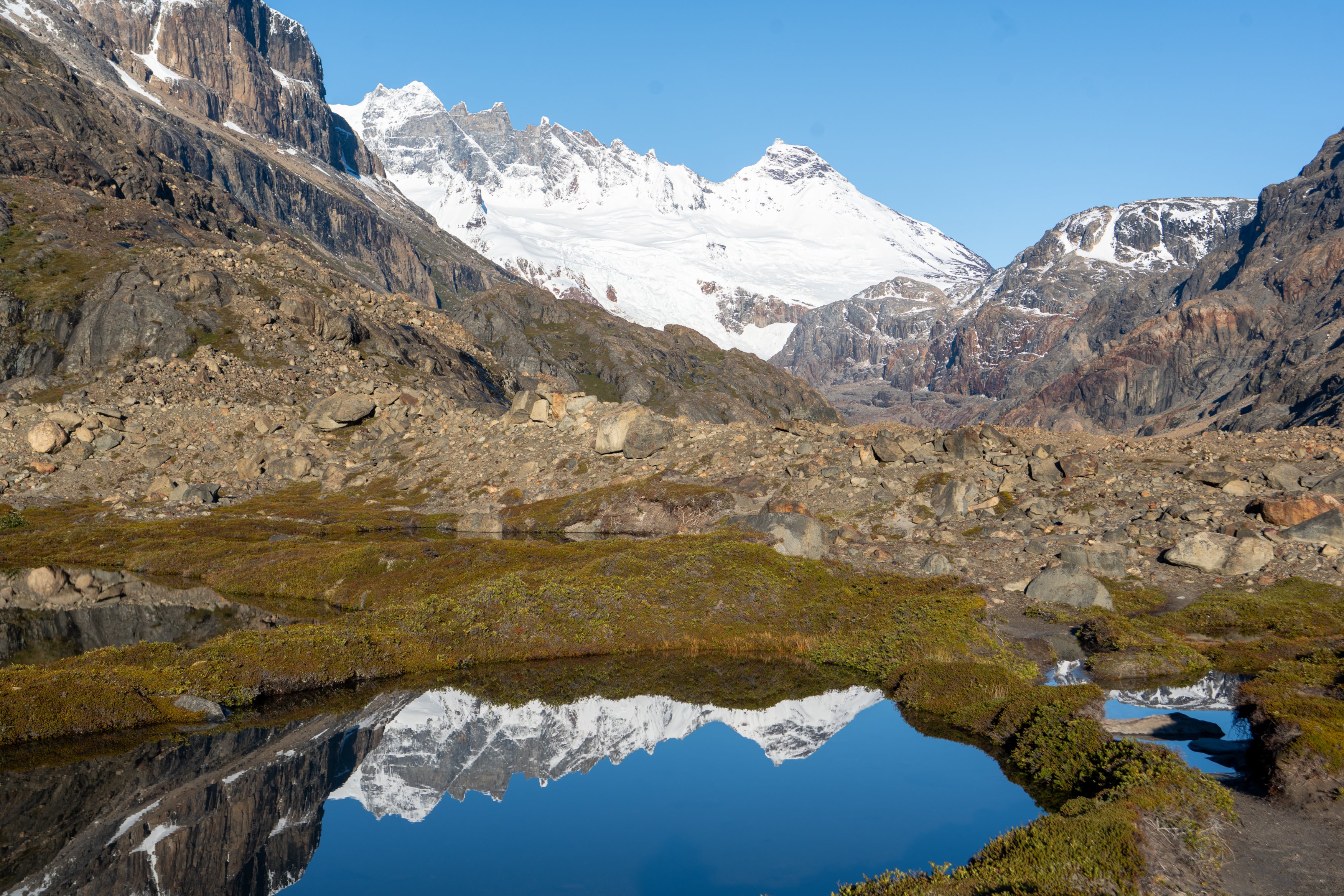
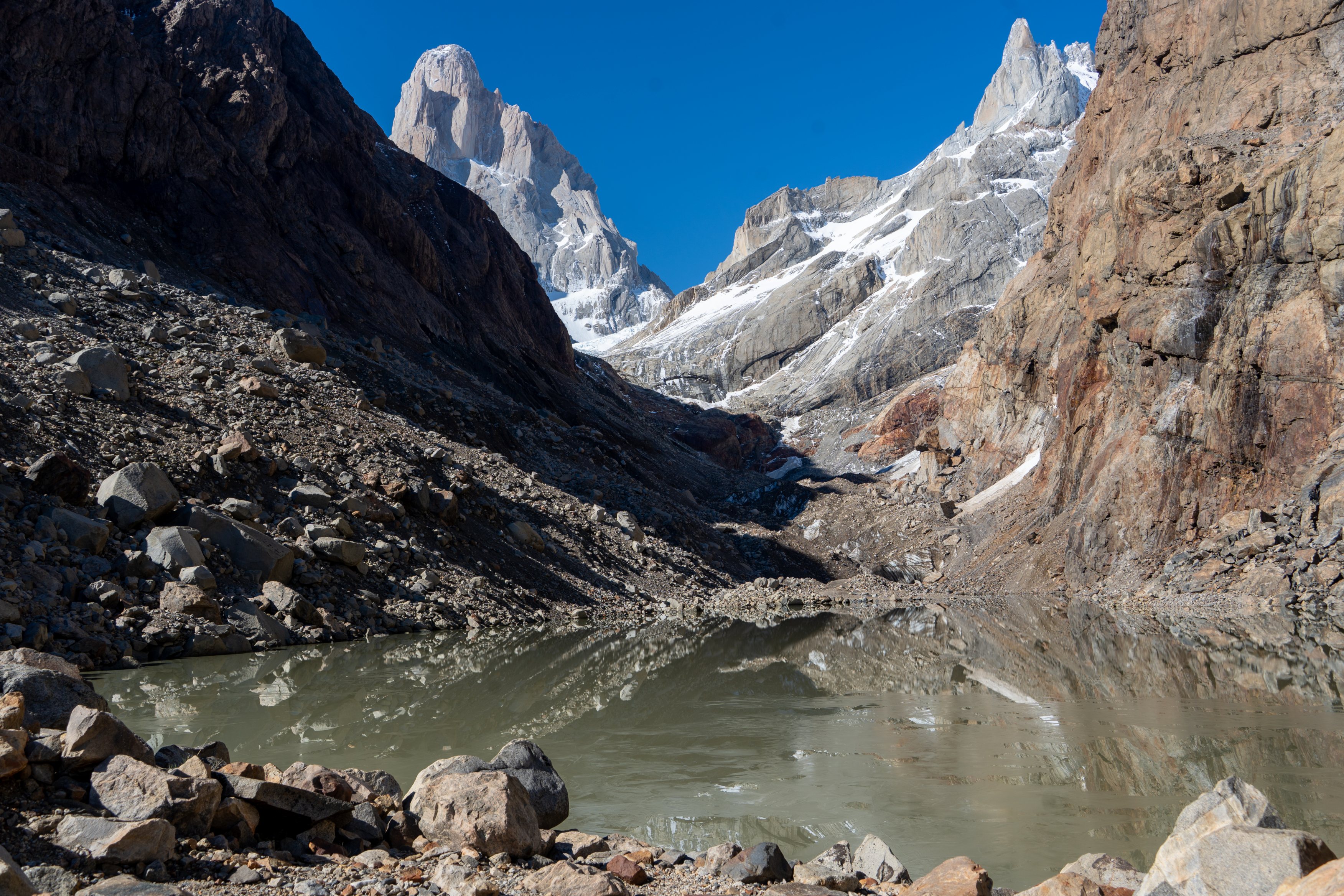
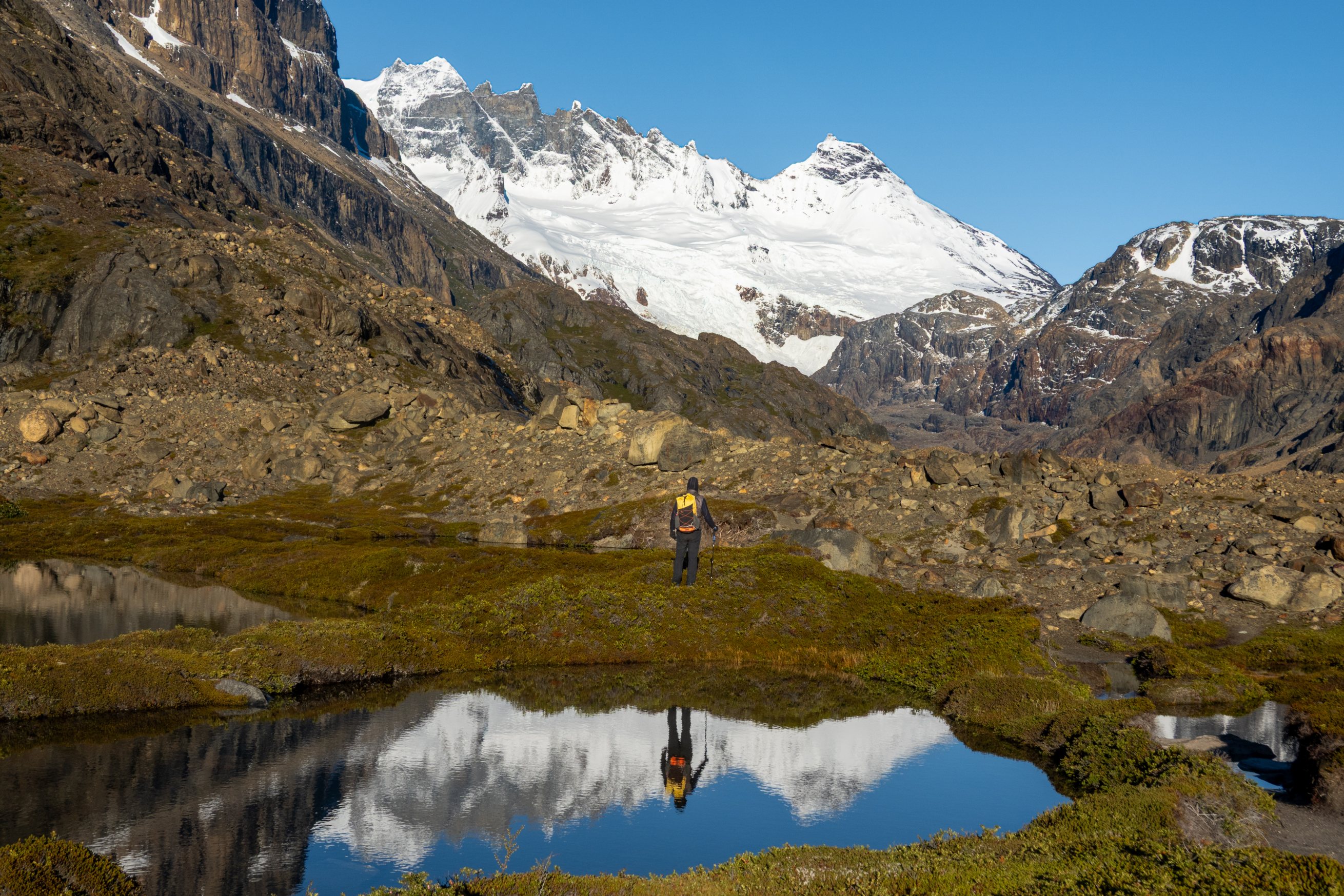
It was an easy ascent to Laguna Pollone. This is a special place. We sat
down, ate some energy bars and just gazed at that awesome, dramatic
scene. The reflections of the mountains echoed in the waters of the
lake, which still had some morning ice drifting across. All was still.
No wind. Such a tranquil moment for us both.
After maybe an hour we were joined by two others from the refuge so we
sat chatting, passing the time of day, until it was time for us to
leave. They were to be the only two people we saw in the whole day until
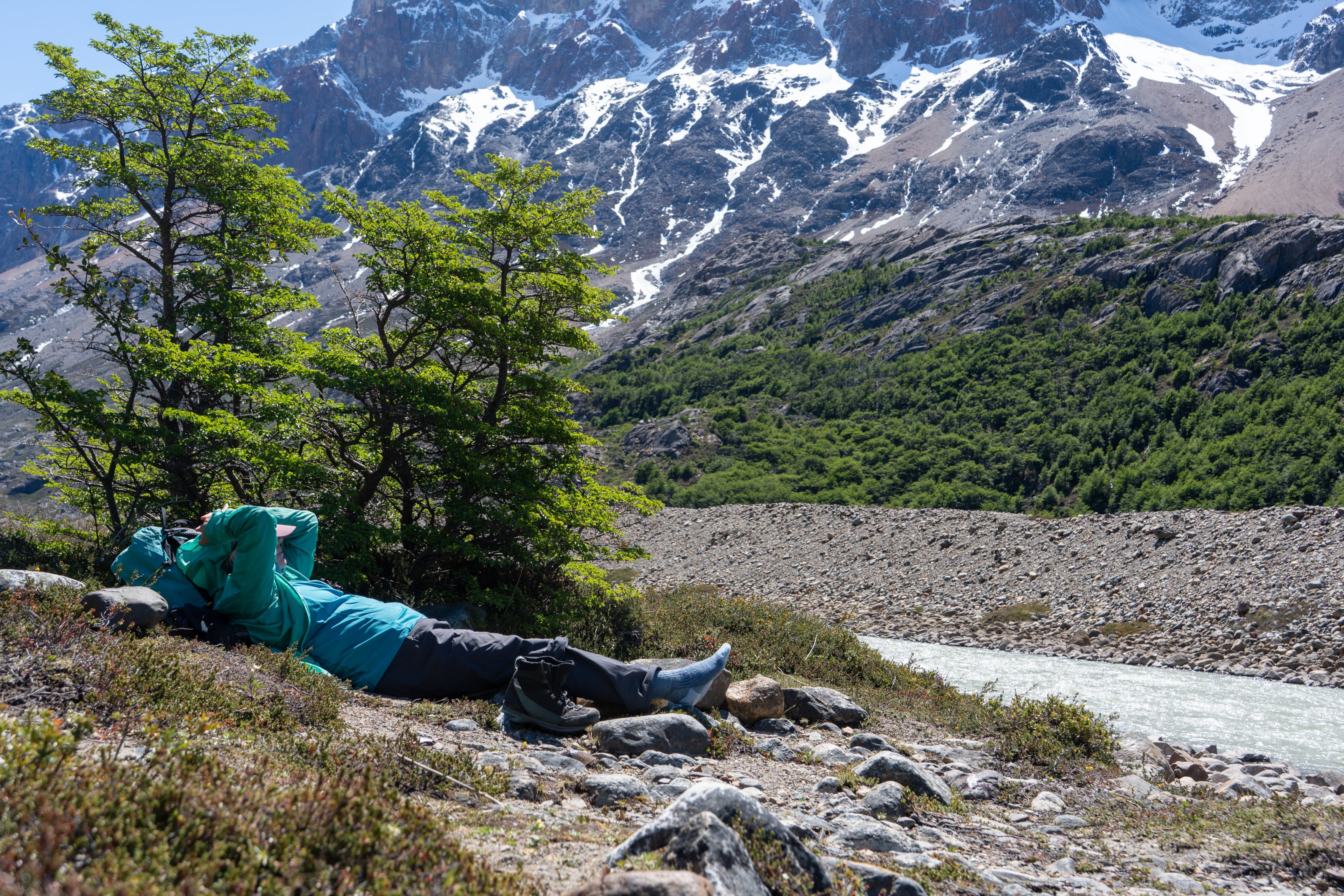
we arrived in the location of the refuge. Here we assisted a lady with
an injured ankle across a rickety bridge and back to the refuge. We then
laid by the banks of the Rio Pollone, in the warm afternoon sun feeling
those wonderful Patagonian breezes cross our faces.
Ghosts of Patagonia Past
Next morning we took our leave of the refuge. The guardians, Pedro
and Marco showed us a video from a year earlier of a Puma at the
campsite. It was on a trunk of a fallen tree really close to where we
had just camped. The Puma didn't seem at all disturbed by the presence
of humans. This reminded me of how we should behave if we did encounter
Puma. Travelling back through the forest you would never know if a Puma
was close, it could hide almost anywhere. It's slightly off putting and
scary knowing that a Puma could be on the trail just round the corner. I
must admit to being slightly twitchy!
Our route today was to be Poincenot camp and then El Chalten the
following day. It was all going well at first, quiet and with nobody
around. But then we joined the main trail between Rio Electrico and
Poincenot. It must have been rush hour as for the next 30 minutes lots
of guided groups of hikers passed us.
We prefer the solitude of the trails, a taste of the ‘Old Patagonia' we
remember. So we simply stepped aside, watching the parade of hikers. We
just sat alongside the trail and watched as they all had their photos
taken on a bridge over the river. Can they all have been "Influencers"?
After the noisy, rush hour had passed, the trail became silent again
apart from a few hikers. Peace was restored and we made our way up to
the magnificent Mirador Glacier Piedras Blancas which was quickly
followed by Mirador Piedras Blancas. Arriving at Poincenot Camp we met
lots of day hikers on the trail. I had (have) no wish to ascend to
Laguna de los Tres. Too crowded, too popular. With only eight kilometers
to go to El Chalten we decided to head back into town and not stay for a
further night out.
Twenty-one kilometers later, we stumbled back into El Chalten, bodies
aching but spirits full. The Refugio del Fraile had changed, yet its
soul remained. The new trails and the ‘Eco' hotel couldn't erase the
memories etched into the landscape, the ghost of my exhausted self
sleeping in the grass, the silent dance of ice on Laguna Pollone, and
the thrilling, twitchy fear of a puma's unseen gaze. The ‘Old Patagonia'
is still there; you just have to know where to look.
Have you ever returned to a beloved wild place to find it changed? What
does ‘Old Patagonia' mean to you?